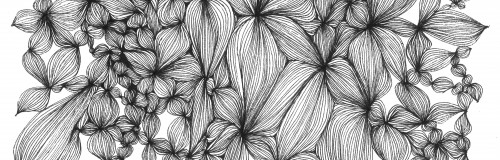
Uisce (2007) – for vocal ensemble
by Kate Moore
Instrumentation: vocal ensemble of 7 to 9 singers
The score is for a vocal ensemble where each singer has an individual part. The number of singers is flexible and works best with an ensemble of more than 6 singers and fewer than 12 singers. The duration of the piece is not fixed but is approximately up to 14’. The concept of the piece is to create a score that illustrates the flow of a river or waterfall where each singer, following the same course, has their own individual path through the piece.
Program note:
Uisce is constructed upon the idea of a fluid structure like a river or waterfall, where the musical line is fluid like tumbling droplets in a stream. The singers follow a thread through the music like a droplet of water in a flowing current. The singers read down the page rather than across, choosing their individual pathways through the score that represents the course of the river. The first performance of the piece in 2007 was by The Song Company who performed the piece as part of the Modart 07 program. The score itself is an artwork, visually representing a waterfall and it has been exhibited at the Galway Arts Centre and in Syracuse New York.
Uisce is the Irish word for water. Written in 2007 on the island of Inishlacken, an artist residency where the artists worked outside in the open air “plein-air” to make work inspired by the island. This composition for singers was written where the sound of water was omnipresent as part of the experience. I was captivated by the word “uisce” because it resembles the word “music”. The term “uisce beatha”, the water of life, is also the etymology of the word whiskey. By linking the Irish word for water and the word music, I embarked upon a long journey in search of the root of the word music, wondering if it may also be derived from a word for water and when considering that the muses were water nymphs that presided over music and the arts, the connection seems inevitable.
In 2018, nearly a decade after writing the piece, I was invited to write the Bosch Requiem. In doing so I studied the city in depth. During the process I noticed mysterious drain pipes on the streets, marked by a celtic design featuring a triskelion, a triple spiral, with the Irish word Uisce. Surprised to find this Irish word on the streets of a Dutch city, I became curious to find out their story. Following these pipes and wondering whether they followed the three rivers that run beneath the city of Den Bosch, the Dieze, the Aa and the Dommel and their connection to the Maas, I wondered whether they might indicate a link to Ireland, or Celtic heritage somehow. That struck a personal chord with me, because it represents my heritage, being of Irish and Dutch descent. The word “Uisce” and the word “Music” became entangled with the heady quest to learn about the history of the city and informed the process of writing the Bosch Requiem, forming a direct link with the festival itself. The Requiem is a ritual about Death and Regeneration/ Birth and Death and the cyclical nature of life, symbolised by the rising of the mouth of a river where a well-spring bubbles to the surface from deep in the earth and set in motion along the course of the flowing stream. A well-spring represents the source of inspiration encapsulated in the phrase “a well-spring of inspiration”.
The connection between Den Bosch and Ireland emerged from my Bosch Requiem research where upon drawing an east to west line on a map, I noticed a long-distance walking route that I named The Ox Way stretching from Oss to the Skelligs in Ireland through the heart of Oxford. Since then it has captured my imagination, leading to my research project A Beautiful Path about “plein-air” composing. I have walked this route twice and along the path I have composed a major folio of compositions that are about the dialogue with nature and the environment. The Ox Way is a walking route where the walker is like a performer and the act of walking the path is itself a performance, in a similar way to Uisce where the performer must forge their own path through the score.
(copyright: Kate Moore 2007)
Other Music for 8 piece vocal ensemble
Psalm 3
Rosae et Lilia
Portraits of St Cecilia
